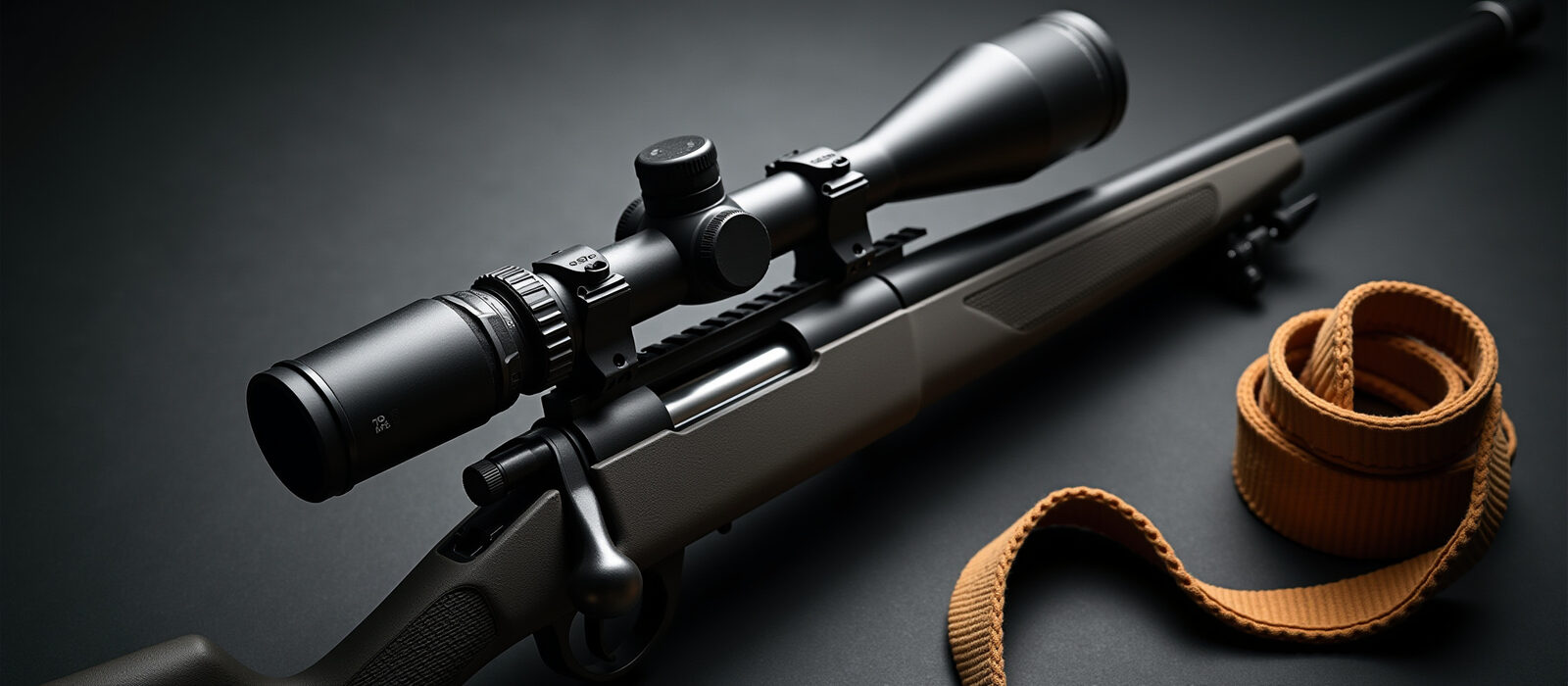
How to Choose the Best Compact Thermal Scope (Compared)
![[HERO] How to Choose the Best Compact Thermal Scope (Compared)](https://cdn.marblism.com/FCwl7iAc6zf.webp)
LEGAL DISCLAIMER: Please be advised that the following content is intended only for general and high-level explanations regarding sports equipment and thermal technology. This blog post does not constitute professional advice, legal counsel, or a binding guarantee of product performance. You should not rely on the information provided herein as a substitute for professional legal advice or technical consultation. Readers are encouraged to seek professional legal counsel regarding local regulations on the possession and use of thermal optics in their specific jurisdiction. AnyTime Optics (‘ATO’) provides this information for educational purposes, and your specific needs and circumstances may vary. Having said that, let’s dive into the world of compact thermal optics.
Hey there! Scott Hills here from AnyTime Optics. If you have been looking to upgrade your hunting setup or tactical gear, you have likely noticed that thermal technology is changing fast. It used to be that a thermal scope was the size of a loaf of bread and cost as much as a used truck. Generally speaking, those days are behind us.
Today, we are talking about the Compact Thermal Scope (‘CTS’). These little powerhouses are designed to give you the same heat-seeking capabilities as the big boys but in a footprint that won’t weigh down your rifle or take up every inch of your rail space. Whether you are a seasoned hunter or just getting started, choosing the right one can be a bit overwhelming. In this guide, we are going to compare what makes a great compact thermal scope, why size matters, and how we at AnyTime Optics are bringing you the smallest, high-quality gear at prices that actually make sense, ranging from $599 to $2843.
What Exactly is a Compact Thermal Scope?
Generally speaking, a compact thermal scope is a Thermal Imaging Device (‘TID’) that prioritizes a small form factor without sacrificing the core sensor technology required for clear heat signatures. While a traditional scope might be 14 inches long and weigh three pounds, a compact model often fits in the palm of your hand.
Having said that, "compact" doesn’t just mean small. It means the engineering has been optimized for weight distribution and ease of use. This is especially important for users running modular platforms like the AR-15 or Short Barreled Rifles (‘SBR’). When you have limited rail space, every millimeter counts. You want an optic that leaves room for backups, lights, or a Laser Rangefinder (‘LRF’).
Key Performance Factors to Consider
When you are looking at a budget thermal scope or even a high-end model, there are three "big" specs you need to keep an eye on. Don't worry, I'll break them down simply.
1. Sensor Resolution
This is the heart of the scope. Generally speaking, resolution is measured in pixels, like 384x288 or 640x480.
- 384x288: This is often the "sweet spot" for a budget thermal scope. It provides enough detail to identify a hog or a coyote at a couple of hundred yards without breaking the bank.
- 640x480: This is the gold standard. It offers significantly more detail and a wider field of view. If you are serious about long-range identification, this is where you want to be.
2. Refresh Rate (Measured in Hertz)
The Refresh Rate (‘RR’) determines how smooth the image looks when you or your target are moving. Most modern compact scopes operate at 50Hz or 60Hz. If you find a cheap scope at 9Hz, run away! A low refresh rate will look like a laggy video game, making it nearly impossible to track a moving target.
3. Thermal Sensitivity (NETD)
Often measured in milliKelvin (‘mK’), this tells you how well the scope can see temperature differences. A lower number (like 25mK or 35mK) is better. It means the scope can "see" the difference between a rabbit and the bush it's hiding in, even in foggy or rainy weather.

Why Small is Better for Your Setup
You might be wondering, "Scott, if the tech is the same, why do I want a smaller scope?" Well, generally speaking, it comes down to balance and fatigue. If you are trekking through the woods for four hours, a heavy rifle becomes a real pain in the neck.
Compact thermal scopes excel on modular platforms. Because they are shorter, they offer a more centered weight distribution. This helps with rapid target acquisition and reduces the strain on your arms. Having said that, you should be aware that compact scopes often have more specific Eye Relief (‘ER’) requirements. Unlike a long tube scope, you might have to mount a CTS a bit further back to get the perfect view.
Comparing the Options: AnyTime Optics vs. The Rest
When we look at the market, you’ll see brands like Pulsar and ATN. They make great stuff, but they can often be bulky or carry a "brand name" tax. At AnyTime Optics, we’ve focused on being the "lean and mean" alternative.
We offer some of the smallest compact thermal scopes on the market. Our thermal scopes category features models that are built to be rugged, portable, and extremely effective.
- The Budget Entry ($599 range): Generally speaking, these are perfect for newcomers or people who need a reliable backup. You get a solid refresh rate and a clear enough image for close-to-mid-range work.
- The Mid-Range Performer: This is where you find better sensors and often integrated features like recording or Wi-Fi.
- The Pro Series (Up to $2843): These are our flagship units. We’re talking high-res sensors, incredible sensitivity, and the kind of build quality that stands up to the toughest conditions.

Feature Comparison Table (General Overview)
| Feature | Budget Compact | Mid-Range Compact | High-End Compact |
|---|---|---|---|
| Resolution | 256x192 / 384x288 | 384x288 | 640x480 |
| Detection Range | ~500 - 800m | ~1000 - 1500m | 2000m+ |
| Battery Life | 4-6 Hours | 6-10 Hours | 10+ Hours |
| Price Point | ~$599+ | ~$1200+ | Up to $2843 |
Please note: These figures are general estimates and your specific performance may vary based on environmental conditions, and much, much more.
The Importance of Software and Ease of Use
Having a great sensor is only half the battle. Generally speaking, the software inside the scope determines how that data is displayed to your eye. We focus on "user-friendly" interfaces. You don't want to be fumbling through five layers of menus while a coyote is staring at you from 100 yards away.
Our scopes, like the HYDRA and the ThermNight series, feature ergonomic buttons that you can feel even if you are wearing gloves. We believe that a compact thermal scope should be an extension of your rifle, not a computer you have to fight with.

Battery Life and Power Management
One concern people often have with compact devices is battery life. Because the body is smaller, the battery is often smaller too. However, modern power management systems have come a long way. Many of our units use standard rechargeable batteries or have internal power-saving modes that kick in when the scope is tilted or stationary.
Generally speaking, you can expect anywhere from 5 to 12 hours of continuous use depending on the model and the ambient temperature. Cold weather may drain batteries faster, so we always recommend carrying a spare set or a portable power bank if your unit supports USB charging.
How to Make Your Choice
So, how do you choose? Generally speaking, you should follow these steps:
- Check Your Budget: Are you looking for a budget thermal scope to get started, or are you ready to invest in a lifetime piece of gear? Our range of $599 to $2843 covers almost every need.
- Define Your Distance: If you are hunting in thick brush where you can't see past 100 yards, a lower-resolution scope will do just fine. If you are scanning open fields, you’ll want the 640 resolution.
- Consider Your Rifle: A small, lightweight scope is the best friend of an AR platform. If you have a massive bolt-action rifle, you might have more room, but you'll still appreciate the weight savings of a CTS.
Having said that, the best way to know what works is to see the specs for yourself. You can check out our full lineup and see detailed descriptions on our all products page.

Final Thoughts on Compact Optics
Choosing a compact thermal scope doesn't have to be a headache. Generally speaking, if you prioritize a good sensor, a high refresh rate, and a size that fits your rifle, you are going to be happy. At AnyTime Optics, we take pride in offering quality that rivals the "big name" brands but at a price point that keeps more money in your pocket for ammo and tags.
Remember, the information provided here is for general educational purposes. It is your responsibility to ensure that your use of thermal optics complies with all local, state, and federal laws. Technology is always changing, and we are here to help you navigate it with the best gear possible.
Whether you need a dedicated thermal, a digital night vision setup, or a red dot magnifier, we have you covered. Check out our store categories for more info on our latest tech, mounting solutions, and much, much more.

LEGAL DISCLAIMER REITERATION: As a final reminder, please do not rely on this content as legal or professional advice. The technical specifications mentioned may change, and AnyTime Optics is not responsible for any reliance placed on this high-level overview. Always consult with a professional and check your local regulations before purchasing or using thermal imaging equipment. Your safety and legal compliance are your own responsibility.
Thanks for stopping by, and stay safe out there! : Scott Hills, Owner/Instructor at AnyTime Optics.