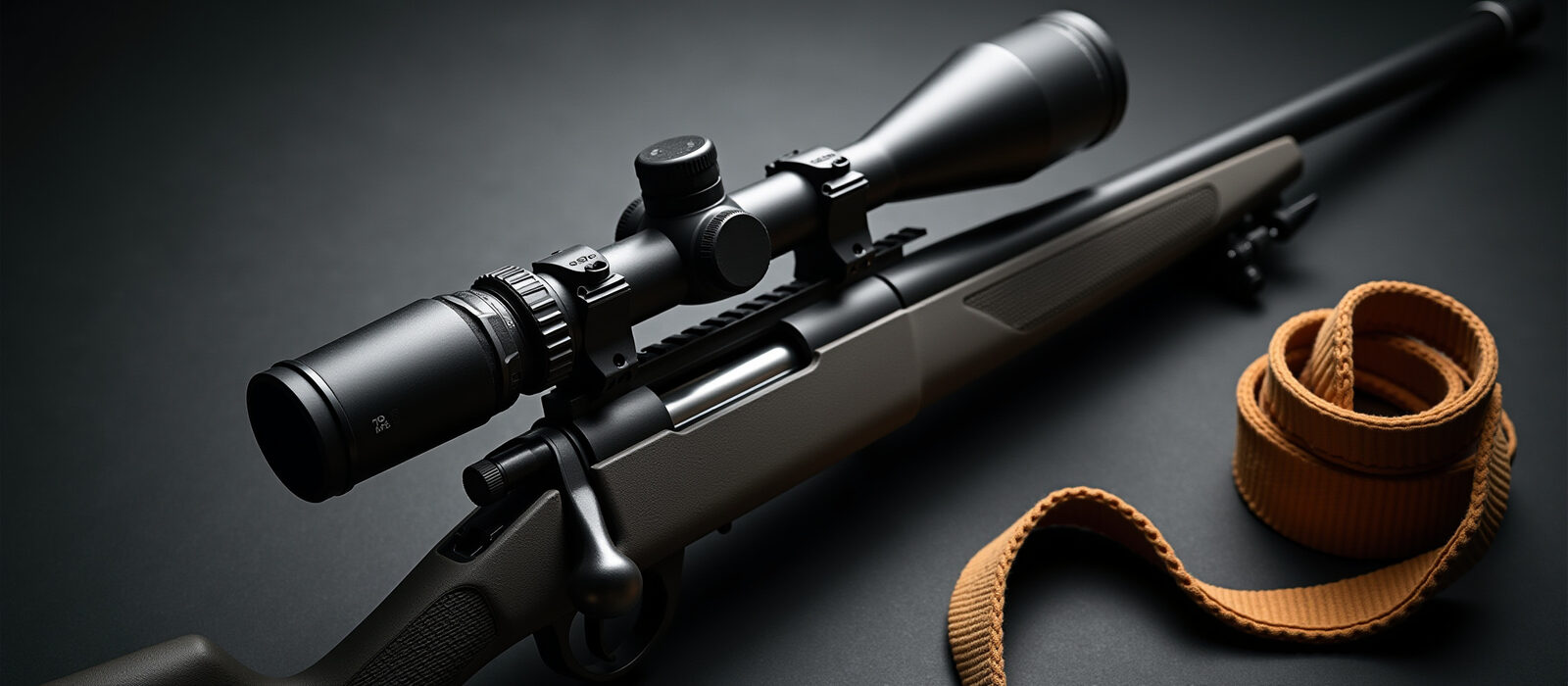
Red Dot vs Thermal Scope: Which Optics Setup Is Right for You?

LEGAL DISCLAIMER: IMPORTANT NOTICE
This article provides only general and high-level explanations about firearm optics, hunting equipment, and related setup considerations. It is intended for educational purposes only and does not constitute legal advice, firearms instruction, hunting advice, or professional guidance. You should not rely on this content to determine whether a particular optic, firearm, hunting method, or activity is lawful in your jurisdiction. Laws and regulations may vary by federal, state, county, and local authority, and they may change over time. You should seek professional legal counsel and consult the appropriate local authorities before making decisions involving firearms, hunting, night vision, thermal equipment, laser rangefinders, or customized firearms. You remain responsible for understanding and following all applicable laws, safety requirements, and manufacturer instructions.
Choosing between a red dot sight for rifle use and a thermal scope usually comes down to one practical question: what do you need your optic to help you do?
A red dot generally helps you aim quickly at a target you can already see. A thermal scope helps you detect heat signatures when lighting, vegetation, distance, or darkness makes ordinary observation more difficult. Those are different jobs, even though both belong in a well-planned collection of hunting optics and rifle optics.
Having said that, you do not always have to choose one forever. Your best setup may involve a red dot on one rifle and a thermal scope on another, depending on when and where you use each platform.
Red Dot Sight vs. Thermal Scope: What Each One Does
A red dot sight (RDS) is an illuminated aiming optic that projects a dot onto a viewing window. You look through the optic, keep both eyes open when appropriate, and place the dot over the target. Generally speaking, a red dot is designed for speed, simplicity, and a broad field of view.
A thermal scope is an electronic optic that detects differences in infrared radiation, commonly understood as heat, and displays those differences on a screen. Instead of relying on visible light alone, it gives you a heat-based view that may help you locate living targets in low light or total darkness.
That difference matters. A red dot does not illuminate or identify a target for you. If the target is difficult to see, the dot may still be visible while the target is not. A thermal scope may help you find a heat signature, but the displayed image can look different from a normal daytime view and may require practice to interpret responsibly.
Daytime Use: Why a Red Dot Often Wins
For normal daytime shooting, a red dot sight for rifle applications is often the more practical choice.
You may appreciate a red dot if you want:
- Fast target acquisition
- Both-eyes-open shooting
- A lightweight and compact setup
- Simple brightness controls
- Long battery life
- A familiar sight picture
- Easy movement between close and moderate distances
If you can already see your target clearly, a red dot generally gives you the aiming reference you need without adding the menus, power demands, or image-processing features associated with many digital optics.
A thermal scope can also be used during daylight, and it may help you notice animals against certain backgrounds. However, thermal imagery may not provide the same natural detail, color information, or intuitive visual reference you receive through your eyes or a traditional optic. For many daytime range sessions, hunting trips, or general-purpose rifle applications, the lower cost and simpler operation of a red dot may make more sense.
You can review AnyTime Optics’ broader rifle scope buying guide if you want to compare task, distance, light, weight, and budget before choosing a product.
Low Light: It Depends on What You Can Still See
Dawn, dusk, deep shade, and woodland cover can create a gray area between daytime and darkness.
A red dot may remain highly useful when there is enough ambient light for you to identify the target and surrounding area. You may also pair it with an appropriate illumination solution where lawful and suitable for your use. The red dot provides the aiming point, while the available light helps you observe the target.
A thermal scope becomes more attractive when the problem is not merely aiming, but finding the target in the first place. Heat contrast may help you locate animals that blend into dark terrain, field edges, or some types of cover.
Generally speaking, you should think about the distinction this way:
- Red dot: best when you can see the target and want to aim quickly.
- Thermal: useful when heat contrast may help you detect the target.
- Day/night scope: a possible middle ground when you want conventional daytime viewing with additional low-light capability.
AnyTime Optics also offers a day scope with night vision around the $400 range, which may appeal to you if you want more flexibility than a conventional red dot without immediately moving into a dedicated thermal budget.

Total Darkness: Thermal Has the Clear Advantage
In genuine total darkness, a red dot alone cannot solve the visibility problem. It can show you the illuminated aiming point, but it cannot show you what is beyond the dot.
A thermal scope may operate without visible light because it detects heat differences. That makes thermal especially relevant for certain nighttime hunting applications, including permitted feral hog, coyote, predator, and other wildlife management activities, depending on your local regulations.
You should not assume that seeing a heat signature automatically means you have identified a lawful target. Thermal imagery can help with detection, but responsible use may still require careful identification of the species, backdrop, surrounding area, and any other factors required by law and safe practice.
For more background on compact form factors, read AnyTime Optics’ guide to compact thermal scopes.
Target Acquisition Speed: Red Dot vs. Thermal Workflow
A red dot is generally faster to operate because its workflow is straightforward: bring the rifle up, find the target, place the dot, and maintain your sight picture.
That simplicity can matter for range drills, close-to-moderate distance shooting, moving targets that you can already see, and situations where you want fewer controls between you and the sight picture.
A thermal scope may add more steps. Depending on the model, you may need to manage:
- Power and battery status
- Focus
- Magnification
- Image palettes
- Digital reticle settings
- Brightness and contrast
- Recording functions
- Rangefinder controls
- Ballistic calculator settings
Having said that, thermal technology is not necessarily slow. Once you become familiar with the controls, a compact thermal can support fast detection and observation in conditions where a red dot would leave you searching through darkness.
AnyTime Optics carries compact thermal designs intended to keep the overall rifle more manageable. The HYDRA thermal lineup, for example, includes multi-function thermal platforms, while the INFITAC thermal rifle sight lineup offers additional compact options to compare.
Hunting Scenarios: Match the Optic to the Hunt
Your hunting conditions should guide the decision more than the optic’s feature list.
Daytime deer, turkey, and general hunting
A red dot may be a strong fit when you hunt during daylight, shoot at moderate distances, and value a lightweight rifle. You may also prefer a traditional day scope if you need magnification or a more detailed natural image.
Night hog and predator hunting
A thermal scope may be better suited to nighttime hunting where permitted, especially when target detection is a central part of the challenge. A thermal can help reveal heat contrast across open fields, field margins, and certain types of vegetation.
Mixed day and night use
For mixed conditions, you may consider a thermal scope, a day/night scope, or a fused optic. AnyTime Optics’ ThermNight lineup combines thermal and night-vision functions in selected models, with options that may include an integrated laser rangefinder (LRF) and ballistic calculator.
An LRF measures distance to a selected target, while a ballistic calculator may use entered cartridge and environmental information to assist with a trajectory solution. These features can be valuable, but they also add complexity, cost, and a responsibility to configure and verify the system correctly.
Cost Tiers: What Fits Your Budget?
A red dot setup is usually the lower-cost entry point. Depending on the optic, mount, batteries, and rifle, you may be able to assemble a capable red dot configuration for the low hundreds of dollars. Premium red dots may cost substantially more, particularly when you prioritize rugged construction, advanced brightness control, enclosed emitters, or extended battery life.
Thermal scopes require a larger investment because they combine an imaging sensor, display, processor, housing, power system, and digital controls.
At AnyTime Optics, thermal options generally range from approximately $599 for budget thermal scope configurations to about $2,843 for premium thermal units, depending on specifications and current availability. Prices may change, so you should check the current AnyTime Optics product lineup before making a purchasing decision.

A simple planning guide may look like this:
| Your priority | Optic to compare first |
|---|---|
| Daytime speed and simplicity | Red dot sight |
| Daytime use with occasional low light | Red dot or day/night scope |
| Detection in total darkness | Thermal scope |
| Integrated distance information | Thermal or fused optic with LRF |
| Lowest overall setup cost | Red dot or budget day/night optic |
| Maximum nighttime flexibility | Premium thermal or fused thermal/night-vision system |
You Do Not Have to Pick Only One
One of the most practical approaches is running both optics on separate rifles.
You might keep a lightweight rifle with a red dot for daytime range use, training, property activities where lawful, or fast-moving targets that you can clearly see. You might reserve a second rifle with a thermal scope for permitted nighttime hunting or observation.
This arrangement lets each rifle do one job well instead of forcing one optic to handle every condition. It may also reduce the need to repeatedly remove, reinstall, and re-zero a single optic between different platforms.
At AnyTime Optics, you can compare compact thermal scopes, red dot sights, night vision, laser rangefinder scopes, and traditional rifle optics through the full product collection. You can also connect with the team at AnyTime Optics, including at gun shows where firearm enthusiasts can discuss equipment in person.
AnyTime Optics recently obtained an FFL Class 7 license, which may also support customized firearm services where legally permitted and properly handled. Your specific project, transfer, configuration, and location may involve separate legal requirements, so you should seek professional legal counsel and verify all applicable rules before proceeding.
Final Decision: Start With Your Real Use Case
Choose a red dot if you primarily need speed, simplicity, low weight, and a clear aiming point during conditions where you can already see the target.
Choose a thermal scope if your priority is detecting heat signatures in low light or total darkness, and if you are prepared for a higher investment and a more involved operating system.
Having said that, the best answer for you may be both: a red dot rifle for straightforward daytime use and a thermal rifle for appropriate nighttime applications. Your conditions, distance, target type, rifle platform, training, budget, and local laws should all shape the decision.
FINAL LEGAL REMINDER: This article contains only general and high-level explanations and should not be relied upon as legal advice or as a substitute for professional guidance. AnyTime Optics does not determine whether your intended use of a red dot sight, thermal scope, night-vision device, laser rangefinder, firearm, or customized firearm is lawful. You should consult professional legal counsel, the relevant wildlife agency, local authorities, and the applicable manufacturer documentation before making decisions for your specific circumstances. You are responsible for safe, lawful, and informed use of your equipment.