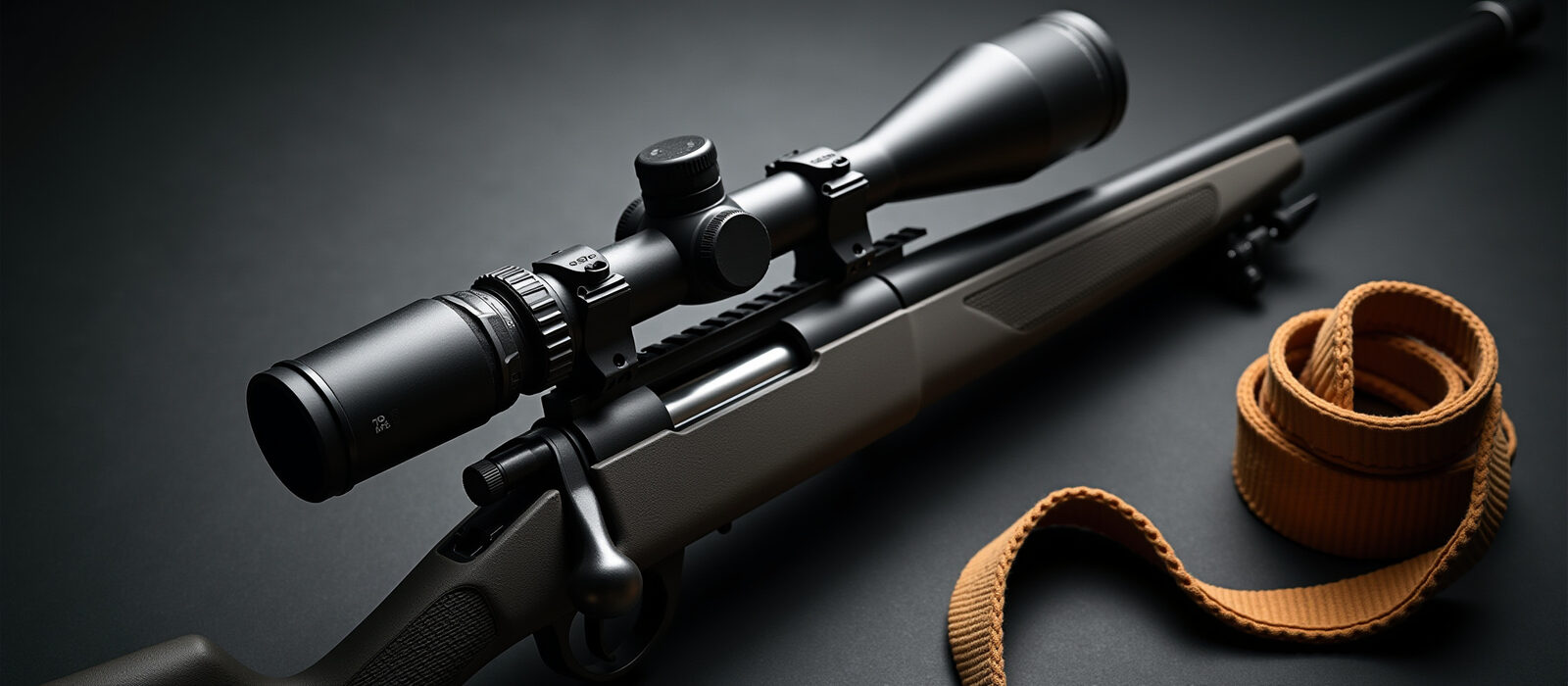
Thermal + Night Vision: Why the TNC Series is Changing the Game
![[HERO] Thermal + Night Vision: Why the TNC Series is Changing the Game](https://cdn.marblism.com/D6Irm9QOwQh.webp)
You know that moment when you're scanning for targets and you spot something with thermal, but then you need to switch over to night vision to confirm what you're actually looking at? Yeah, that's annoying. And let's be honest: by the time you fumble with switching devices or changing modes, whatever you spotted might be long gone.
That's exactly the problem the TNC Series was designed to solve. Instead of making you choose between thermal imaging or night vision, these scopes give you both. At the same time. In the same view.
What's the Big Deal About Multispectral?
The term "multispectral" sounds fancy, but the concept is pretty straightforward. Traditional optics make you pick your poison: either use thermal imaging to detect heat signatures, or use night vision to identify details. The TNC Series (that's Thermal Night Combo, by the way) combines both technologies into a single scope.
Here's why that matters: thermal imaging is incredible for detection. It sees through darkness, fog, light rain, and even some foliage because it's reading heat signatures, not visible light. But thermal alone? It can be tough to identify exactly what you're looking at. Is that a coyote or a dog? A deer or a cow?
That's where the digital night vision channel comes in. While thermal does the heavy lifting for detection, you can simultaneously use the night vision feed to get crystal-clear identification. The TNC Series lets you run both channels together using Picture-in-Picture (PIP) mode, so you're seeing thermal and night vision in a single integrated image.

No more switching. No more guessing. No more missed opportunities.
Meet the Family: TNC 635, 335, and 225
The TNC lineup comes in three flavors, and they're all built around the same brilliant concept: just with different specs to match your needs and budget.
The TNC 635R is the flagship. It packs a 640x512 thermal sensor, which means you're getting seriously detailed thermal imaging. This is your go-to if you need maximum detection range and the clearest thermal picture possible. The higher-resolution sensor picks up more detail, making it easier to spot targets at extended distances.
The TNC 335R sits in the sweet spot for most users. It uses a 384x288 thermal sensor: still plenty of resolution for solid detection, but at a more accessible price point. You're not sacrificing the core functionality; you're just optimizing for the 80/20 rule. Most hunters and recreational shooters will find this model gives them everything they need.
The TNC 225R is the compact option. With a 256x192 thermal sensor, it's the most budget-friendly entry into the combo world. Don't let the smaller numbers fool you, though: this thing is only 7 inches long and weighs just 645 grams. It's incredibly portable, and it's actually rated for .50BMG recoil. That's seriously impressive for such a compact package.
All three models share the same fundamental advantages: you get thermal detection combined with digital night vision identification, built-in laser rangefinder capabilities, and rugged construction that can handle whatever you throw at them.
Why Combo is Better Than Switching
Let's talk about the old way of doing things. You'd run a thermal spotter to scan and detect targets, then either switch to a different scope or toggle to a different mode to identify and engage. Or maybe you'd mount a night vision clip-on in front of your day scope. Both approaches work, sure, but they're clunky.

With the TNC Series, you eliminate all that friction. Here's what you gain:
Speed: When you spot a heat signature with thermal, you're not stopping to switch devices or cycle through menus. The night vision image is already there, helping you immediately identify your target. In hunting situations where seconds matter, that's huge.
Simplicity: Less gear means less weight, less complexity, and fewer things that can go wrong in the field. Instead of managing multiple devices with different batteries, settings, and mounting systems, you've got one scope that handles everything.
Consistency: Your zero stays consistent because you're not physically changing optics. The TNC Series even features "one-shot zeroing" that calibrates both the thermal and digital night vision channels simultaneously with a single shot. That's a massive time-saver.
Versatility: The TNC scopes actually give you three observation modes: day optics, thermal, and night vision. You can run them during daylight hours, in complete darkness, through fog, or in any combination of challenging conditions. That kind of flexibility is hard to beat.
All TNC models come with IP67 waterproofing, so you don't need to baby them when the weather turns nasty. They're built to perform in real-world conditions.
The Rangefinder and Ballistic Calculator Advantage
Here's another piece of the puzzle that makes the TNC Series stand out: these scopes have built-in laser rangefinders that reach out to 1,100 yards. But it's not just about getting a distance reading.
The rangefinder talks to an onboard ballistic calculator that instantly computes your firing solution based on the range, your specific ammunition, and environmental factors. The scope then displays either dial-in corrections or holdover points directly in your reticle. You're getting a complete shooting solution without pulling out a phone app or doing mental math.
This integration is what "changing the game" really means. You're not cobbling together separate tools and hoping they work well together. Everything: thermal detection, night vision identification, ranging, and ballistics: is unified in a single package that's designed to work as a cohesive system.
Don't Forget the NVMD-C200
While we're talking about versatile night vision options, it's worth mentioning the NVMD-C200. This is a digital night vision device that offers serious flexibility in a different way.

The NVMD-C200 can run as a clip-on in front of your existing day scope, or you can use it as a standalone monocular for observation. If you're already invested in a quality day scope and want to add night capability without replacing everything, the C200 gives you that option. It's not thermal, so you won't get the same fog-penetrating detection capabilities, but it's a solid choice for dedicated night vision performance at a lower price point.
The quick-detach mounting system means you can pop it on or off quickly, and the lightweight design won't throw off your rifle's balance too much. For someone who primarily shoots during legal light hours but occasionally needs night capability, it's worth considering.
Who Should Consider the TNC Series?
Honestly? If you're serious about shooting in low-light conditions and want to simplify your gear while maximizing your capabilities, the TNC Series deserves your attention.
Hunters who pursue predators or hogs at night will love the ability to detect heat signatures while still getting positive identification before taking a shot. The ethical aspect of knowing exactly what you're shooting at can't be overstated.
Competitive shooters who participate in night matches or want to train after dark will appreciate having professional-grade optics that don't require a PhD to operate. The learning curve is surprisingly gentle given how much technology is packed into these scopes.
Even recreational shooters who want to extend their range time into the evening hours will find the TNC Series opens up new possibilities. There's something genuinely fun about shooting with thermal and night vision capabilities: it feels like you're using gear from the future.
The Bottom Line
The multispectral approach isn't just a gimmick: it's a genuine evolution in how optics work. By combining thermal detection with digital night vision identification in a single integrated package, the TNC Series eliminates the compromises and frustrations of older systems.
Whether you go with the high-resolution TNC 635, the balanced TNC 335, or the compact TNC 225, you're getting a scope that handles detection and identification simultaneously. Add in the integrated rangefinder, ballistic calculator, and one-shot zeroing, and you've got a complete shooting solution that's actually practical to use in the field.
If you're tired of switching between devices or dealing with the limitations of single-mode optics, it's time to check out what combo technology can do. The TNC Series isn't just changing the game: it's rewriting the rules entirely.
Want to explore the full lineup? Head over to AnyTime Optics and see which TNC model fits your needs. Your future nighttime shooting sessions will thank you.