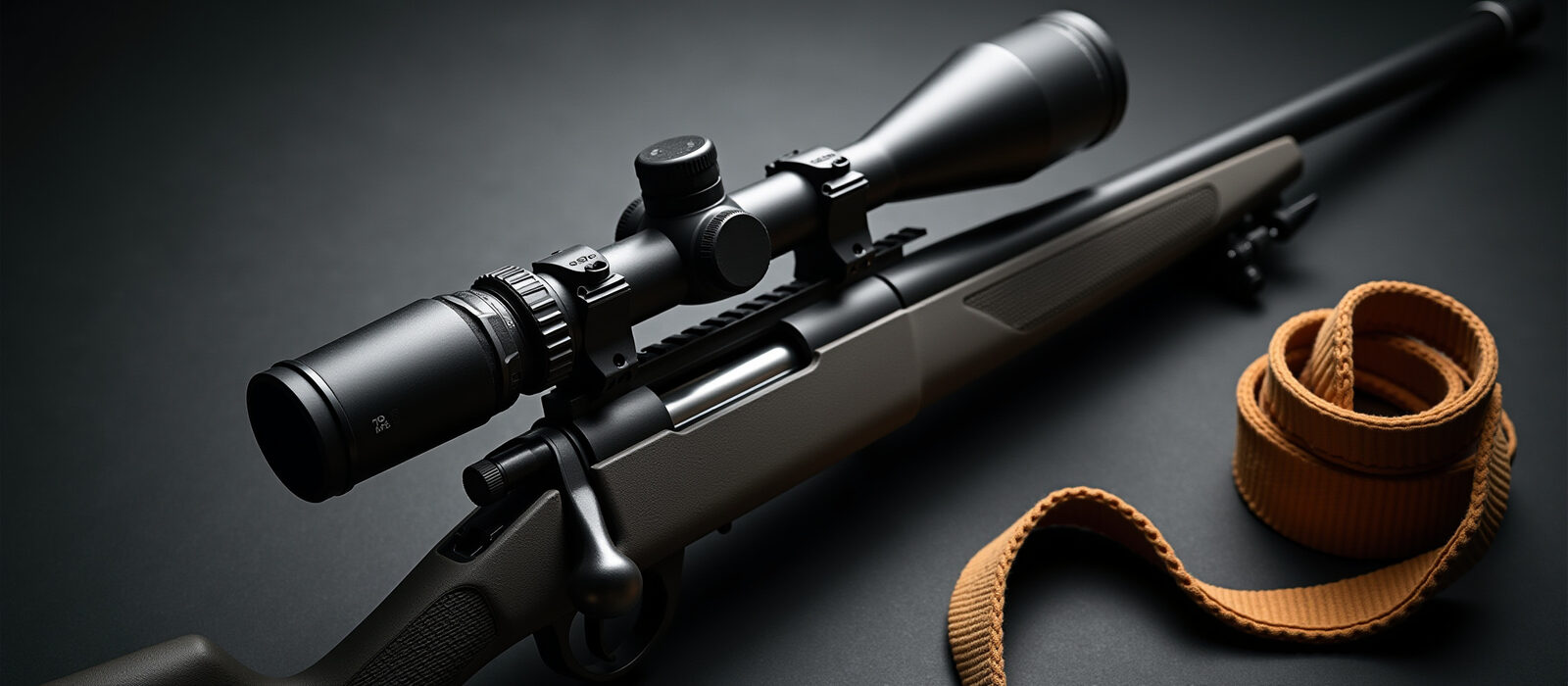
Why Everyone Is Talking About Compact Thermal Scopes (And You Should Too)
LEGAL DISCLAIMER: IMPORTANT NOTICE
This article provides only general and high-level explanations concerning compact thermal scopes, thermal scopes, night vision scopes, hunting optics, firearm equipment, and related technologies. It is intended solely for educational purposes and should not be relied upon as legal advice, firearms instruction, hunting advice, technical advice, or professional guidance. You should not rely on this content to determine whether a particular optic, firearm, laser rangefinder, hunting method, or customized firearm is lawful or appropriate in your jurisdiction. Laws and regulations may vary by federal, state, county, and local authority and may change over time. You should seek professional legal counsel and consult qualified firearms, wildlife, and public-safety authorities regarding your specific circumstances. You remain responsible for understanding and following all applicable laws, safety rules, manufacturer instructions, and ethical practices.
If you have spent time looking at modern hunting optics or visiting a gun show recently, you have probably noticed a clear trend: thermal imaging systems are becoming smaller, lighter, and more adaptable.
The compact thermal scope is no longer viewed only as a scaled-down version of a larger optic. Instead, it is becoming a practical platform for hunters, firearm enthusiasts, and tactical professionals who want thermal capability without carrying a rifle that feels top-heavy or packing several separate viewing devices.
Having said that, “compact” does not automatically mean better for every use. It generally means that the manufacturer has made different trade-offs involving sensor size, lens design, battery capacity, controls, mounting, and features. Understanding those trade-offs can help you see why the market is moving in this direction.
Why Thermal Optics Are Getting Smaller
The main reason compact thermal scopes are possible today is that the entire imaging system has improved.
Modern thermal scopes commonly use uncooled microbolometer sensors (thermal sensors that operate without a cryogenic cooling system). Removing the need for bulky cooling hardware reduces size, power demand, noise, and mechanical complexity.
Smaller detector pixel pitches (the spacing between individual sensor pixels) can also help manufacturers design more compact camera cores and lens assemblies. Industry systems have moved from commonly used 12-micron sensors toward smaller formats in some applications, including 8-micron and other emerging designs.
Generally speaking, a smaller sensor package may allow a shorter focal-length lens for a comparable field of view. That does not mean every small optic provides the same image detail or long-range performance as a larger model. Objective diameter, resolution, sensitivity, refresh rate, processing, and lens quality still matter.
The shrinking components may include:
- The thermal sensor and electronics, which can occupy less internal space
- The objective lens, particularly when the system is designed around a smaller detector pitch
- The display and eyepiece assembly, which may require less housing volume
- The battery system, as lower-power electronics may reduce the need for large battery compartments
- The mount footprint, especially on optics designed for clip-on, offset, or multi-platform use
The result is not simply a smaller tube. It is a complete system designed around lower size, weight, and power requirements.
For additional background, you can review Teledyne FLIR’s information on Boson thermal camera modules and the U.S. Army’s overview of the Family of Weapon Sights–Individual.
A Better-Balanced Rifle
One of the most noticeable benefits of a compact thermal scope is how it changes the way your rifle carries.
An optic mounted above the receiver raises the rifle’s center of gravity. A long or heavy unit can increase rotational inertia, making the rifle feel slower when you move between shooting positions or track a moving subject.
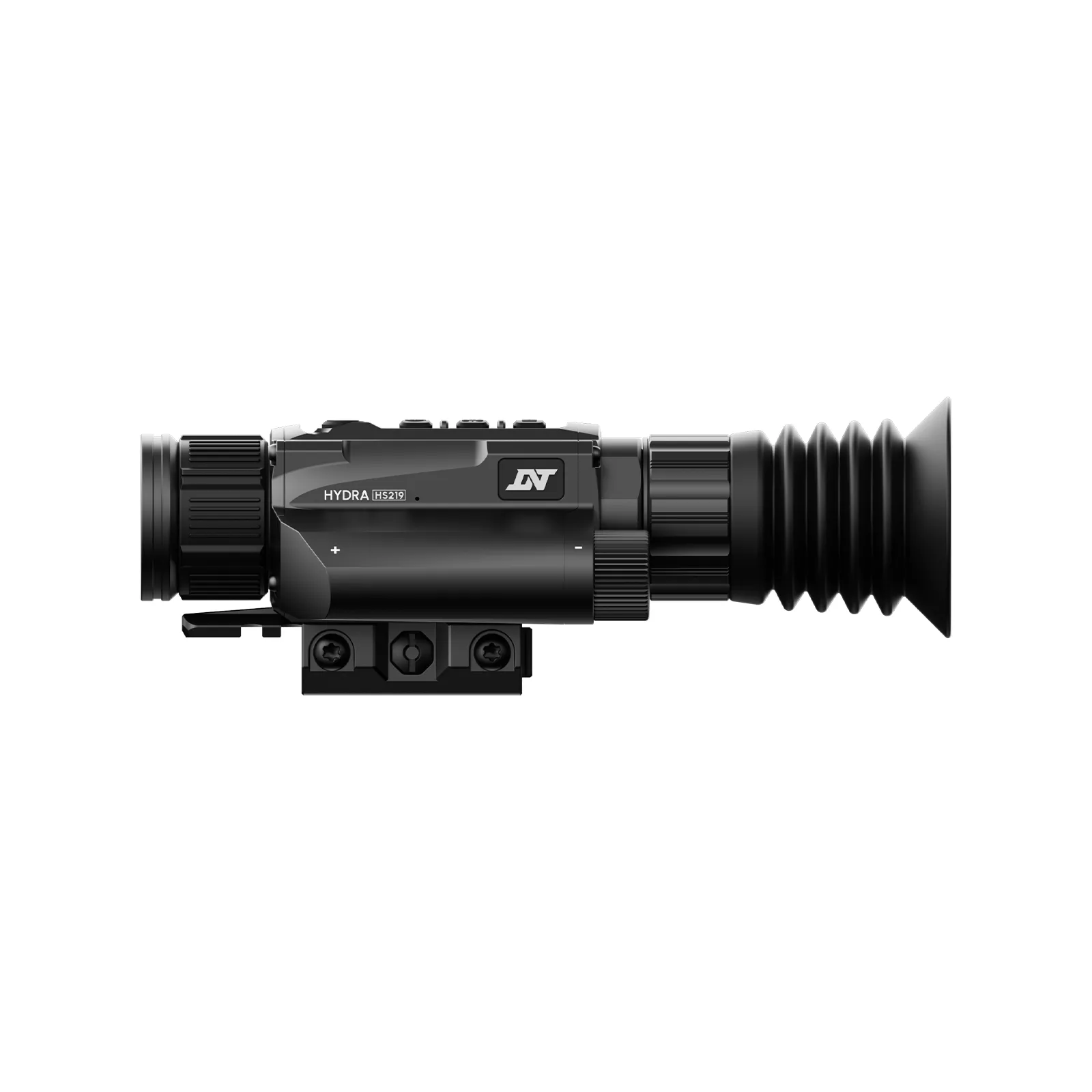
A shorter, lighter thermal optic may keep more of the rifle’s mass closer to your body. That can make it easier for you to carry, shoulder, scan, and reposition the firearm, although the actual result depends on the rifle, mount, battery placement, and optic design.
This matters when you are moving between hunting stands, crossing uneven ground, or carrying equipment for several hours. A large thermal scope can provide useful capability, but you may notice every ounce when it is combined with a rifle, ammunition, tripod, spare batteries, and other field gear.
That is one reason compact hunting optics are drawing attention: they may give you additional viewing capability without making the entire setup feel like a boat anchor.
Cold-Weather Handling and Glove-Friendly Controls
Cold-weather use creates challenges that are easy to overlook when you are comparing specifications indoors.
Your gloves may make small buttons difficult to locate. Batteries may provide less usable capacity in freezing temperatures. Condensation, frost, rain, and snow can affect lenses and electronics. A control layout that feels simple with bare hands may become less convenient when you are wearing insulated gloves.
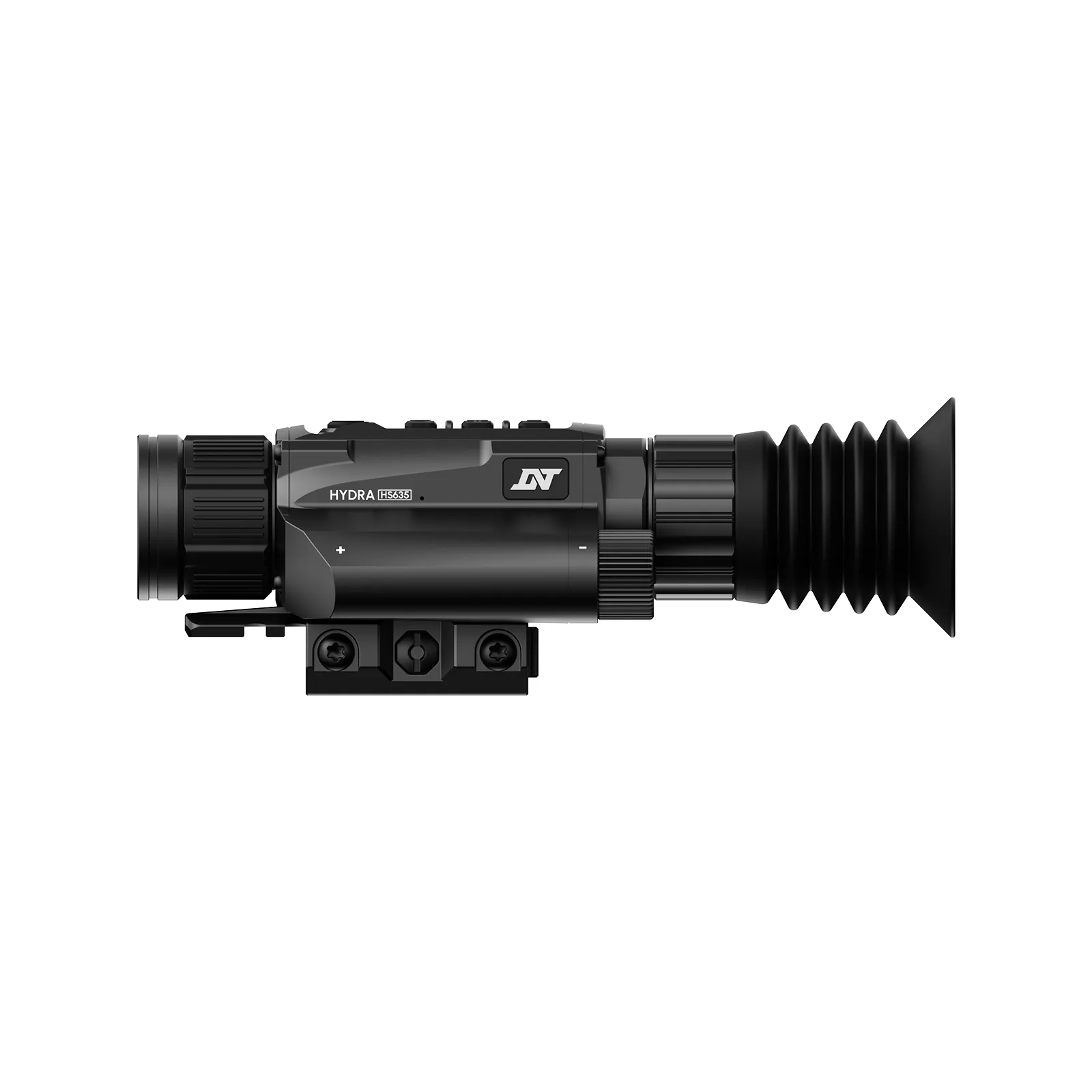
Many compact thermal scopes address this by using larger buttons, tactile controls, simplified menus, and mechanical focus rings. These features may help you operate the optic without removing your gloves, although the experience remains product-specific.
You should also consider how easily you can:
- Turn the optic on without looking away from your setup
- Adjust focus or magnification by feel
- Change viewing palettes or modes
- Check battery status
- Access spare batteries or charging ports
- Protect the objective lens from moisture and frost
Having said that, a compact housing does not guarantee superior cold-weather performance. You should review the manufacturer’s specifications and instructions for the exact thermal scope you are considering, and you remain responsible for determining whether it suits your conditions.
One Optic, Several Roles
Another reason compact thermal systems are becoming popular is flexibility.
Some models can function as a dedicated thermal scope, clip-on, handheld viewer, or offset optic. That means you may be able to use one device across multiple platforms instead of purchasing a separate device for every task.
The INFITAC lineup includes compact thermal systems such as the IOP13, which is listed for standalone, clip-on, handheld, and 45-degree offset use. The compact format may also make it easier to move an optic between firearms, subject to compatible mounts, proper setup, and the manufacturer’s instructions.
This flexibility is especially relevant if you want thermal capability for scanning but do not want to replace your existing day optic. A clip-on can preserve your familiar daytime scope and add a thermal view in front of it. The trade-offs may include optical alignment, mount height, added length, return-to-zero behavior, and the total weight of the combined system.
A compact thermal optic can also serve as a handheld monocular for observation. In that role, you may appreciate the smaller body even more because you are carrying it separately rather than supporting it on a rifle.
Helmet-Mounted and Monocular Applications
Miniaturization is not limited to rifle-mounted thermal scopes.
Smaller thermal cores, displays, and batteries are also helping manufacturers build more manageable monoculars and helmet-mounted systems. A compact night vision scope or thermal monocular may be used for handheld observation, head-mounted awareness, or other specialized applications, depending on the model and mounting system.
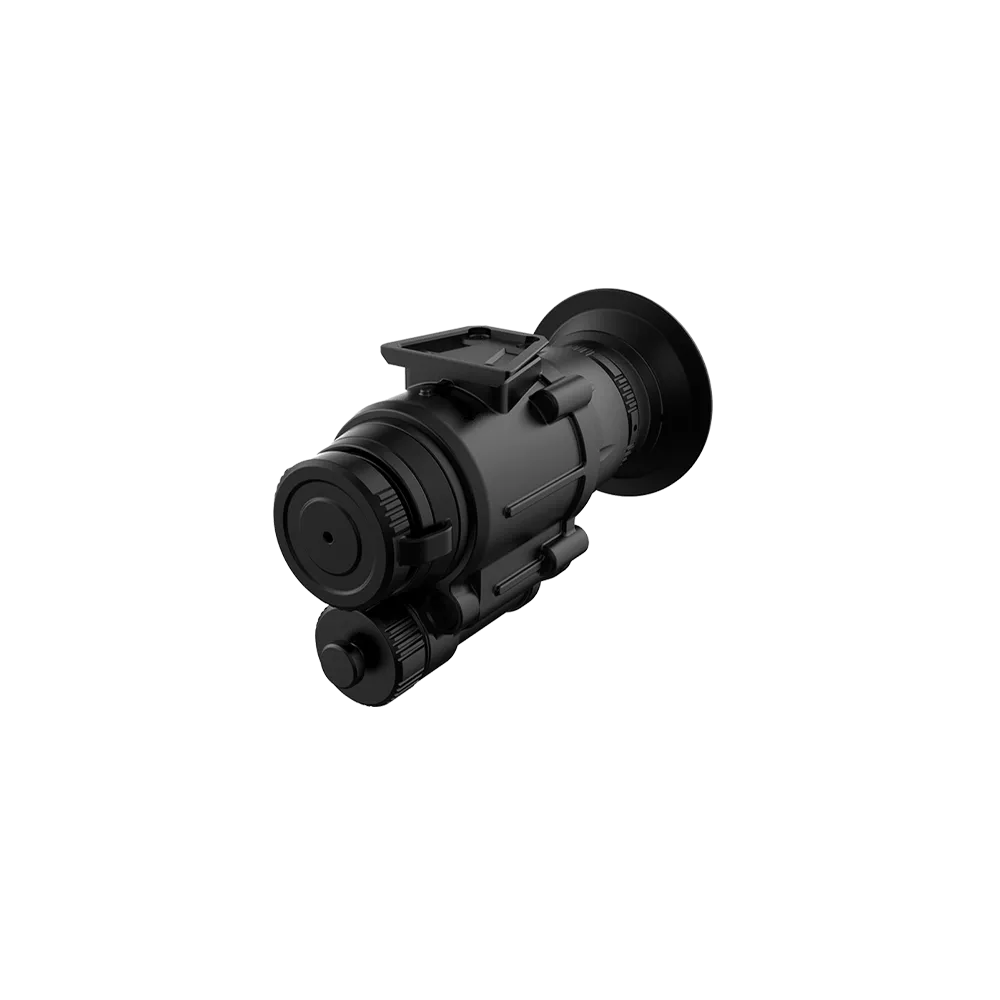
Helmet-mounted equipment introduces a different form of balance. A few extra ounces positioned forward of your helmet can increase neck strain over time. For that reason, compactness may matter even more in a monocular than it does on a rifle.
You should verify the intended mounting method, total system weight, battery arrangement, field of view, and operating limitations before relying on any helmet-mounted configuration. A night vision scope and a thermal monocular also produce different types of images, as explained in AnyTime Optics’ thermal versus night vision guide.
Why Day-Night Systems Are Gaining Attention
For many users, the appeal of a compact thermal scope is not only size. It is consolidation.
A traditional setup might involve a day scope, a night vision scope, a thermal scanner, and a handheld rangefinder. A fused day-night optic may combine some of those functions into one housing.
Thermal imaging detects differences in infrared energy. Night vision generally uses available light, often with digital processing or infrared illumination. A fused system may allow you to switch between thermal contrast and a more recognizable digital scene view as conditions change.
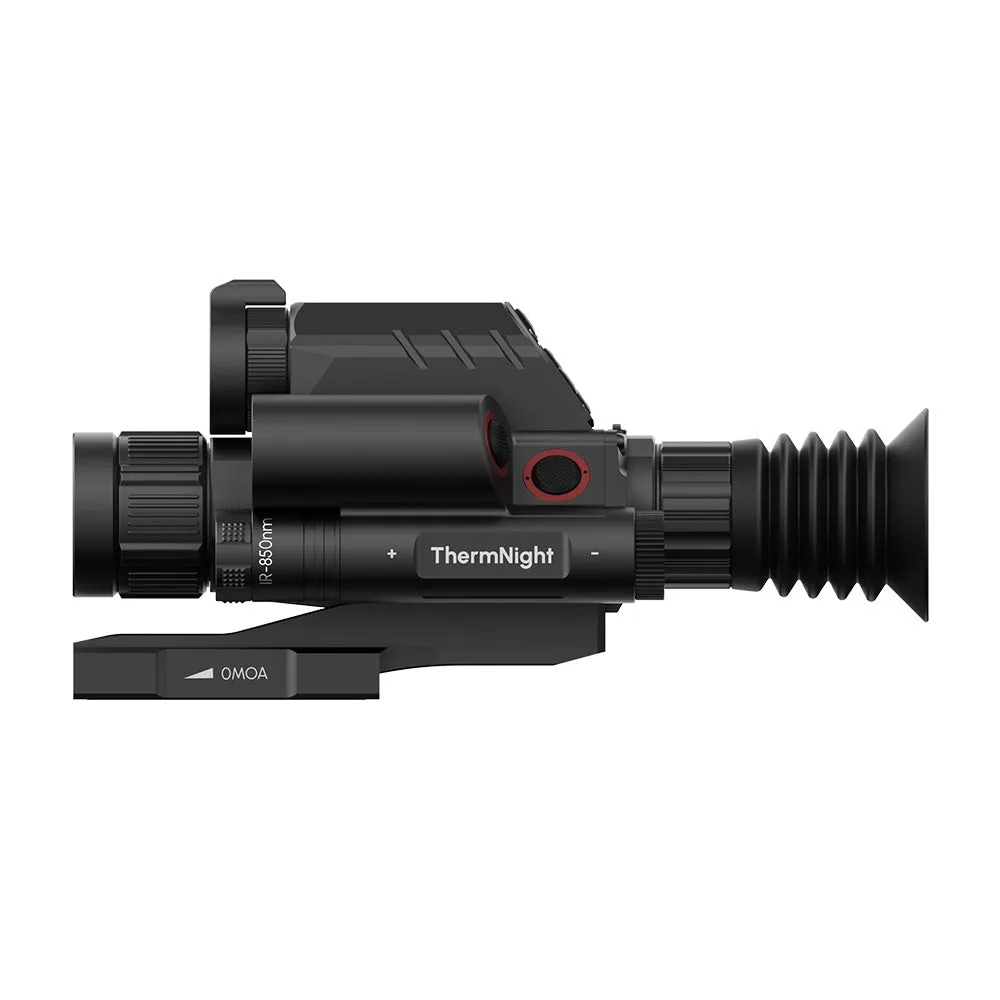
AnyTime Optics’ ThermNight line includes selected fused thermal and night vision models with integrated laser rangefinder (LRF) and ballistic calculator features. The current ThermNight lineup includes products designed to bring several viewing functions into one compact sightline.
This kind of consolidation may reduce the amount of equipment you carry, but it can also add software, controls, electronics, and power requirements. You may gain flexibility while accepting greater complexity.
When an Integrated Laser Rangefinder Makes Sense
An integrated LRF may be useful when you regularly need distance information while remaining behind the optic.
A rangefinder can measure the distance to a selected surface, while a ballistic calculator (BC) may use that distance with other information to estimate a correction. The reliability of the result depends on the quality of the range return and the accuracy of inputs such as zero distance, sight height, ammunition data, and muzzle velocity.
Generally speaking, an integrated LRF may make the most sense when:
- You operate in open country where distance changes frequently
- You want to reduce the number of separate devices you carry
- You value keeping your viewing position consistent
- Your chosen optic properly integrates ranging and ballistic information
- You are prepared to verify the system with your own rifle and ammunition
An LRF does add components, weight, and power demands. Therefore, a rangefinder-equipped compact optic will not necessarily be lighter than a simpler thermal model. The HYDRA HS650R, for example, is listed as a multi-function thermal platform with an integrated rangefinder and ballistic calculator.
Why This Trend Matters to You
The shift toward smaller thermal systems reflects how people actually use optics in the field.
You may want a rifle that remains balanced while walking between stands. You may need controls that you can operate with gloves. You may want one device that can move between a rifle and handheld use. Or you may prefer a day-night system instead of carrying three separate optics.
AnyTime Optics carries compact thermal scopes, thermal scopes, night vision scopes, and hunting optics across a range of configurations. The company’s commonly discussed pricing range runs from approximately $599 to $2,843, although current prices and availability may change. AnyTime has also highlighted day-and-night scope options around $400, compared with traditional day scopes priced at $300 or more, depending on the model and current specifications.
The company’s presence at gun shows gives enthusiasts an opportunity to examine different form factors in person, compare controls, and discuss intended applications directly. AnyTime Optics also holds an FFL Class 7 license for customized firearm services, subject to applicable laws, regulations, and individual requirements.
You can compare current products, review the compact thermal scope guide, or contact AnyTime Optics with questions about current configurations.
Final Thoughts
Compact thermal scopes are gaining attention because they may give you more capability with less weight, less equipment, and a more manageable overall setup.
The technology got smaller through improvements in uncooled sensors, electronics, lens design, displays, batteries, and mounting systems. The practical gains may include better rifle balance, easier transport, more comfortable cold-weather operation, helmet or monocular flexibility, and a simpler day-night configuration.
Having said that, compact does not remove the need to evaluate image quality, lens performance, battery endurance, controls, mounting, rangefinder integration, and the complete weight of your setup. Your specific use, equipment, environment, and legal responsibilities remain important.
LEGAL REMINDER: This article provides only general and high-level explanations and should not be relied upon as legal advice, firearms instruction, hunting advice, or professional technical guidance. You should not rely on this content to make decisions about the legality or suitability of a thermal scope, night vision scope, hunting optic, firearm, laser rangefinder, or customized firearm for your circumstances. You should seek professional legal counsel and consult current federal, state, and local authorities, along with manufacturer instructions and qualified professionals, before making decisions specific to your needs.